Understanding the minimum car insurance requirements is crucial for drivers across the United States.
Each state has its own set of rules regarding the minimum auto insurance coverage required to legally operate a vehicle.

Navigating these state car insurance minimumsstate car insurance minimums can be complex, but it’s essential for complying with the law and avoiding potential penalties.
As of 2026, these requirement continue to evolve, making it vital for http://with the law and avoiding potential penalties. As of 2026, these requirementsdrivers to stay informed.
Cheap Car Insurance for New Drivers in USA (2026 Guide to Save Money Fast)
Key Takeaways
- Minimum car insurance requirements vary significantly across different states.
- Understanding state-specific insurance laws is crucial for legal compliance.
- Staying updated on the latest changes in state car insurance minimums is essential.
- Drivers must be aware of the minimum auto insurance coverage required in their state.
- Non-compliance with state insurance requirements can result in severe penalties.
- minimum car insurance requirements by state
Understanding Car Insurance Requirements in the USA
The United States has a diverse landscape when it comes to car insurance regulations, with each state setting its own minimum requirements. This diversity reflects the different economic, demographic, and legislative factors at play across the country.
Why States Regulate Car Insurance
States regulate car insurance to ensure that drivers can cover the costs of damages or injuries they may cause to others in an accident. This regulation helps maintain public safety and financial protection for citizens.
How Minimum Requirements Are Determined
Minimum car insurance requirements are determined based on various factors, including the state’s financial responsibility laws, the rate of uninsured drivers, and the cost of living. For instance, states with higher costs of living or more litigious environments may have higher minimum liability coverage limits.

Recent Changes in State Requirements for 2026
As of 2026, some states have updated their minimum car insurance requirements. For example, certain states have increased their minimum liability coverage limits or added new requirements for uninsured/underinsured motorist coverage. Drivers should check with their state’s insurance department for the most current information.
Key changes include:
- Increased minimum liability coverage in several states
- New requirements for uninsured/underinsured motorist coverage
- Adjustments to personal injury protection (PIP) coverage in no-fault states
Types of Car Insurance Coverage Explained
Car insurance policies typically include several types of coverage, each serving a distinct purpose. Understanding these different components is essential for selecting the right policy that meets state minimum car insurance requirements and provides adequate financial protection.
Liability Coverage: Bodily Injury and Property Damage
Liability coverage is a fundamental component of car insurance, mandated by most states. It includes bodily injury liability, which covers medical expenses for injuries to others in an accident, and property damage liability, which pays for damages to other vehicles or property. Ensuring you have sufficient liability coverage is crucial for complying with minimum state car insurance regulations.

Personal Injury Protection (PIP)
Personal Injury Protection (PIP) covers medical expenses for you and your passengers, regardless of who is at fault in an accident. PIP is mandatory in some states and is a valuable addition to your policy, even where it’s not required, as it helps with medical bills and lost wages.
Uninsured/Underinsured Motorist Coverage
This coverage protects you if you’re involved in an accident with someone who doesn’t have insurance or doesn’t have enough insurance to cover the damages. It’s an essential component for safeguarding against financial loss due to others’ lack of adequate insurance coverage.
Medical Payments Coverage
Medical Payments Coverage helps pay for medical expenses resulting from an accident, regardless of fault. While it overlaps with PIP in some respects, it’s available in states where PIP isn’t mandatory and can be a useful addition to your auto insurance policy.
Understanding these types of coverage and how they work together is key to navigating the complex world of auto insurance state minimums and ensuring you have the protection you need.
Minimum Car Insurance Requirements by State
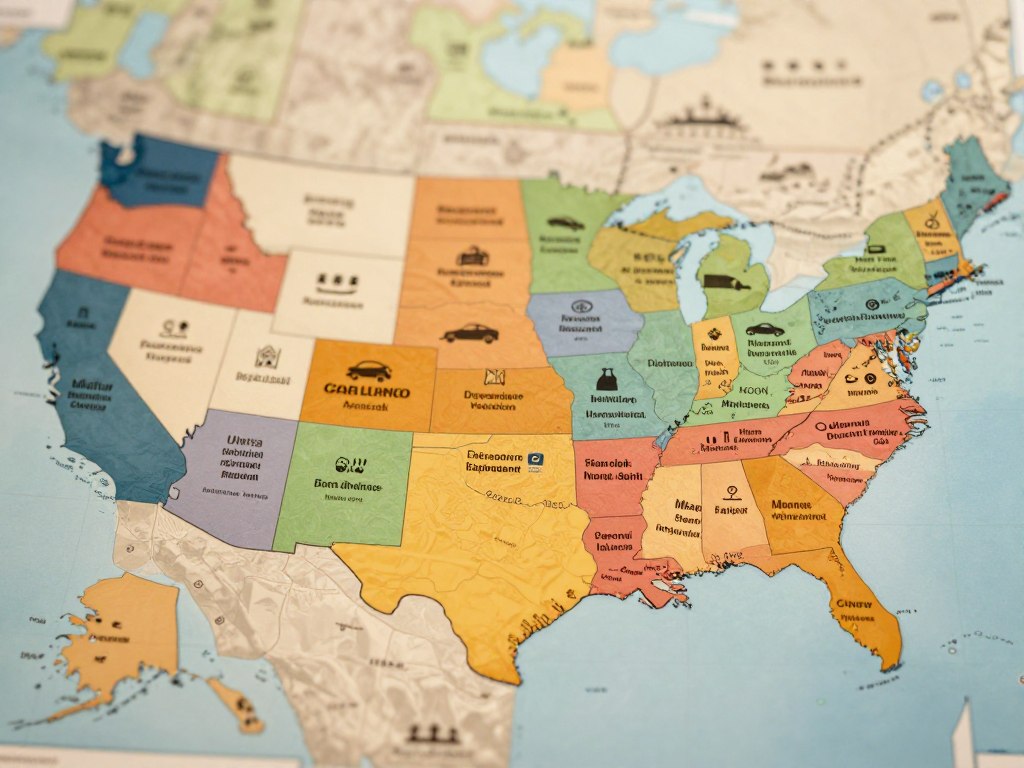
The minimum car insurance requirements vary significantly across different states, making it essential for drivers to be aware of their state’s specific requirements. This variation is due to the different regulations and laws governing car insurance in each state.
How to Read Insurance Requirement Notations
Insurance requirement notations can be confusing, but understanding them is crucial. Typically, these notations are represented in a format like “25/50/25.” This notation signifies the minimum coverage limits for bodily injury liability per person, bodily injury liability per accident, and property damage liability, respectively.
For example, “25/50/25” means $25,000 for bodily injury per person, $50,000 for bodily injury per accident, and $25,000 for property damage. Understanding these notations helps drivers ensure they meet their state’s minimum requirements.
At-Fault vs. No-Fault Insurance States
States are either at-fault or no-fault when it comes to car insurance. In at-fault states, the driver responsible for the accident is liable for damages. In no-fault states, drivers file claims with their own insurance company, regardless of who caused the accident.
Understanding whether your state is at-fault or no-fault is crucial for determining the type of coverage you need. No-fault states often require Personal Injury Protection (PIP) as part of their minimum insurance requirements.
Using the State-by-State Guide
Our state-by-state guide provides a comprehensive overview of the minimum car insurance requirements for each state. This guide is designed to help drivers quickly identify their state’s specific requirements.

| State | Minimum Liability Coverage | PIP Coverage |
|---|---|---|
| California | 15/30/5 | No |
| New York | 25/50/10 | Yes |
| Texas | 30/60/25 | No |
By using this guide, drivers can ensure they have the necessary coverage to comply with their state’s laws and regulations.
Northeastern States Insurance Requirements
Understanding the minimum car insurance requirements in the Northeastern states is crucial for drivers. The region, comprising states with diverse insurance laws, necessitates a closer look at the specific requirements for each state.
Connecticut, Maine, Massachusetts
In Connecticut, drivers are required to have a minimum of $25,000 in bodily injury liability coverage per person and $50,000 per accident. Maine requires $50,000/$100,000 in bodily injury liability coverage, while Massachusetts mandates $20,000/$40,000.
New Hampshire, New Jersey, New York
New Hampshire is unique in that it does not require car insurance for all drivers, but those who choose to drive without insurance face significant penalties. New Jersey requires $15,000/$30,000 in bodily injury liability coverage, and New York mandates $25,000/$50,000.
Pennsylvania, Rhode Island, Vermont
Pennsylvania requires $15,000/$30,000 in bodily injury liability coverage. Rhode Island mandates $25,000/$50,000, while Vermont requires $10,000/$20,000.
Notable Regional Trends for 2026
A notable trend in the Northeast for 2026 is the increase in minimum coverage requirements in some states. For instance, Massachusetts has increased its uninsured motorist coverage requirements. Drivers should stay informed about these changes to ensure compliance.
| State | Bodily Injury Liability | Property Damage Liability |
|---|---|---|
| Connecticut | $25,000/$50,000 | $25,000 |
| Maine | $50,000/$100,000 | $25,000 |
| Massachusetts | $20,000/$40,000 | $5,000 |
| New Hampshire | N/A | N/A |
| New Jersey | $15,000/$30,000 | $5,000 |
| New York | $25,000/$50,000 | $10,000 |
| Pennsylvania | $15,000/$30,000 | $5,000 |
| Rhode Island | $25,000/$50,000 | $25,000 |
| Vermont | $10,000/$20,000 | $10,000 |
Southeastern States Insurance Requirements
Drivers in the Southeastern states must navigate different state minimum car insurance limits. The region includes a mix of states with varying requirements, making it essential for drivers to understand the specific regulations in each state they drive in.
Alabama, Arkansas, Florida
Alabama requires drivers to have liability insurance with minimum limits of $25,000/$50,000/$25,000. Arkansas has similar requirements, while Florida mandates Personal Injury Protection (PIP) and Property Damage Liability (PDL) with minimum limits of $10,000 each.
Georgia, Kentucky, Louisiana
Georgia and Kentucky have liability insurance requirements with minimum limits of $25,000/$50,000/$25,000. Louisiana requires similar limits but also mandates PIP coverage.
Mississippi, North Carolina, South Carolina
Mississippi and South Carolina follow the $25,000/$50,000/$25,000 liability insurance minimums. North Carolina requires $30,000/$60,000/$25,000.
Tennessee, Virginia, West Virginia
Tennessee and Virginia have minimum liability limits of $25,000/$50,000/$25,000. West Virginia requires $20,000/$40,000/$10,000.
Hurricane Zone Special Considerations
Drivers in hurricane-prone areas should consider comprehensive coverage to protect against storm damage. Hurricane zones often experience higher insurance rates due to the increased risk.
| State | Liability Insurance Minimum Limits |
|---|---|
| Alabama | $25,000/$50,000/$25,000 |
| Arkansas | $25,000/$50,000/$25,000 |
| Florida | $10,000 (PIP) / $10,000 (PDL) |
| Georgia | $25,000/$50,000/$25,000 |
| Louisiana | $15,000/$30,000/$25,000 |
Understanding these requirements is crucial for drivers to ensure they are adequately insured and compliant with state laws.
Midwestern States Insurance Requirements
The Midwestern United States has a diverse range of minimum car insurance requirements. Drivers in this region must be aware of the specific requirements for the state in which they are driving.
Illinois, Indiana, Iowa
In Illinois, drivers are required to have liability coverage of at least $25,000 per person and $50,000 per accident in bodily injury, and $20,000 in property damage. Indiana requires $25,000/$50,000/$25,000, while Iowa mandates $20,000/$40,000/$15,000.
Kansas, Michigan, Minnesota
Kansas requires $25,000/$50,000/$25,000 in liability coverage. Michigan has a unique requirement due to its no-fault insurance law, mandating unlimited personal injury protection (PIP) coverage. Minnesota requires $30,000/$60,000/$10,000.
Missouri, Nebraska, North Dakota
Missouri requires $25,000/$50,000/$25,000. Nebraska mandates $25,000/$50,000/$25,000, while North Dakota requires $25,000/$50,000/$25,000.
Ohio, South Dakota, Wisconsin
Ohio requires $25,000/$50,000/$25,000. South Dakota mandates $25,000/$50,000/$25,000, and Wisconsin requires $25,000/$50,000/$10,000.
Recent Legislative Changes in the Midwest
Recently, some Midwestern states have made changes to their insurance requirements. For instance, Michigan’s transition to a no-fault insurance system has significantly impacted drivers’ insurance needs.
| State | Bodily Injury Liability | Property Damage Liability |
|---|---|---|
| Illinois | $25,000/$50,000 | $20,000 |
| Indiana | $25,000/$50,000 | $25,000 |
| Iowa | $20,000/$40,000 | $15,000 |
| Kansas | $25,000/$50,000 | $25,000 |
Southwestern States Insurance Requirements
The Southwestern United States encompasses a diverse range of states, each with its own set of minimum car insurance requirements. Drivers in this region must be aware of these requirements to ensure compliance and adequate coverage.
Arizona, New Mexico, Oklahoma
In Arizona, drivers are required to have liability insurance that covers at least $25,000 for bodily injury per person and $50,000 per accident. New Mexico mandates minimum coverage of $25,000 for bodily injury per person and $50,000 per accident, along with $10,000 for property damage. Oklahoma requires $25,000 for bodily injury per person, $50,000 per accident, and $25,000 for property damage.
- Arizona: $25,000/$50,000/$15,000 (bodily injury per person/per accident/property damage)
- New Mexico: $25,000/$50,000/$10,000
- Oklahoma: $25,000/$50,000/$25,000
Texas
Texas requires drivers to have liability insurance with minimum limits of $30,000 for bodily injury per person, $60,000 per accident, and $25,000 for property damage. Texas also has specific requirements for uninsured motorist coverage.
Border State Considerations
For drivers who frequently cross state lines, understanding the minimum car insurance requirements in neighboring states is crucial. For instance, drivers in Texas should be aware of the requirements in New Mexico and Oklahoma. Ensuring that your insurance policy meets the highest minimum requirements of the states you visit can help avoid legal issues.
Western States Insurance Requirements
The Western United States encompasses a diverse range of states, each with its own set of minimum car insurance requirements. This diversity is reflective of the region’s varied landscapes, populations, and economic conditions.
Alaska, California, Colorado
Alaska requires drivers to have liability insurance with minimum coverage limits of $50,000 for bodily injury or death per person, $100,000 for bodily injury or death per accident, and $25,000 for property damage. California mandates minimum coverage limits of $15,000 for bodily injury or death per person, $30,000 for bodily injury or death per accident, and $5,000 for property damage. Colorado requires minimum liability coverage limits of $25,000 for bodily injury or death per person, $50,000 for bodily injury or death per accident, and $15,000 for property damage.
Hawaii, Idaho, Montana
Hawaii has minimum coverage requirements that include $20,000 for bodily injury or death per person, $40,000 for bodily injury or death per accident, and $10,000 for property damage. Idaho requires $25,000 for bodily injury or death per person, $50,000 for bodily injury or death per accident, and $15,000 for property damage. Montana mandates $25,000 for bodily injury or death per person, $50,000 for bodily injury or death per accident, and $20,000 for property damage.
Nevada, Oregon, Utah
Nevada requires minimum liability coverage of $25,000 for bodily injury or death per person, $50,000 for bodily injury or death per accident, and $20,000 for property damage. Oregon mandates $25,000 for bodily injury or death per person, $50,000 for bodily injury or death per accident, and $20,000 for property damage. Utah has minimum coverage limits of $25,000 for bodily injury or death per person, $65,000 for bodily injury or death per accident (combined single limit), and $15,000 for property damage.
Washington, Wyoming
Washington state requires drivers to have liability insurance with minimum coverage limits of $25,000 for bodily injury or death per person, $50,000 for bodily injury or death per accident, and $10,000 for property damage. Wyoming mandates minimum coverage limits of $25,000 for bodily injury or death per person, $50,000 for bodily injury or death per accident, and $20,000 for property damage.
Wildfire Zone Insurance Implications
Some Western states are prone to wildfires, which can significantly impact car insurance requirements and premiums. Drivers in these areas should be aware of the potential implications on their insurance coverage. For instance, comprehensive coverage may be essential to protect against wildfire damage.
- Key Considerations:
- Understanding state-specific minimum car insurance requirements
- Recognizing the impact of natural disasters like wildfires on insurance
- Ensuring adequate coverage beyond minimum state requirements
States with the Highest Insurance Requirements
State-specific car insurance requirements can be quite different, with a few states setting the bar higher than the rest. Understanding these differences is crucial for drivers to ensure they are adequately covered and compliant with state laws.
Current Top States for Coverage Requirements
As of 2026, states like New Jersey, New York, and Alaska are among those with the highest car insurance requirements. These states mandate higher liability coverage limits and often include additional coverage types such as Personal Injury Protection (PIP).
What Makes These Requirements Higher
The factors contributing to higher insurance requirements in these states include higher population densities, more severe weather conditions, and a higher incidence of uninsured drivers. For instance, no-fault insurance states like New Jersey and New York have higher PIP coverage to ensure that medical expenses are covered regardless of fault.
Benefits of Higher Minimum Coverage
While higher minimum coverage requirements may increase insurance premiums, they also provide greater financial protection in the event of an accident. Drivers in states with higher requirements are less likely to be left with significant out-of-pocket expenses for medical bills or property damage.
Comparing state minimum car insurance requirements can help drivers understand the importance of adequate coverage and make informed decisions when selecting an insurance policy.
States with the Lowest Insurance Requirements
The minimum car insurance requirements vary significantly across the United States, with some states having notably low thresholds. Understanding these requirements is crucial for drivers to ensure they are adequately covered without overpaying for insurance.
States with Minimal Coverage Mandates
Some states have minimal car insurance requirements, making them more attractive to drivers looking to minimize their insurance expenses. For instance, states like New Hampshire and Virginia have relatively low minimum coverage requirements. New Hampshire, for example, does not require drivers to have car insurance if they can prove financial responsibility.
Drivers in these states should be aware of the potential risks of having only the minimum required coverage. While it might save them money in the short term, it could lead to significant financial burdens in the event of an accident.
Risks of Minimum Coverage in These States
Having only the minimum required insurance coverage can expose drivers to various financial risks. In the event of a serious accident, medical bills, and vehicle repairs can quickly exceed the minimum coverage limits, leaving drivers to cover the remaining costs out of pocket.
Furthermore, drivers with only minimum coverage may find themselves underinsured when facing lawsuits or other financial liabilities resulting from an accident. It’s essential for drivers in these states to consider their financial situation and the potential risks before deciding on their insurance coverage.
Supplemental Coverage Recommendations
To mitigate the risks associated with minimum coverage, drivers are advised to consider supplemental insurance coverage. This can include collision coverage, comprehensive coverage, and uninsured/underinsured motorist coverage. These additional coverages can provide a financial safety net in various scenarios, from accidents to natural disasters.
Drivers should assess their individual needs, driving habits, and financial situation to determine the appropriate level of coverage. Consulting with an insurance professional can also help in making informed decisions about supplemental coverage.
Moving Between States: Adjusting Your Coverage
Adjusting your car insurance coverage is essential when you move to a new state to ensure you’re meeting the state’s minimum car insurance requirements. This process involves researching the new state’s insurance laws, updating your policy, and being aware of potential issues that may arise during the transfer.
How to Research New State Requirements
To comply with your new state’s insurance regulations, start by visiting the state’s insurance department website or consulting with a licensed insurance agent. They can provide detailed information on the minimum car insurance limits by state, including liability coverage, personal injury protection, and other required coverage types.
Timeline for Updating Your Policy
It’s crucial to update your car insurance policy as soon as possible after your move. Most states require you to register your vehicle within a certain timeframe (often 30 days), and you’ll need to show proof of insurance that meets the state’s minimum requirements.
Common Interstate Transfer Issues
One common issue is ensuring your current insurer operates in your new state. If not, you’ll need to find a new insurance provider. Additionally, your premiums may change due to differences in state insurance rates and your personal circumstances.
| State | Minimum Liability Coverage | Personal Injury Protection (PIP) |
|---|---|---|
| California | $15,000/$30,000/$5,000 | Not Required |
| New York | $25,000/$50,000/$10,000 | $50,000 |
| Florida | $10,000/$20,000/$10,000 | $10,000 |
By understanding the state minimum car insurance requirements and taking proactive steps, you can ensure a smooth transition and maintain adequate coverage.
Consequences of Driving Without Meeting State Minimums
Driving without the minimum required car insurance can lead to severe consequences, varying significantly from state to state. Understanding these consequences is crucial for drivers to make informed decisions about their auto insurance coverage.
Legal Penalties by State Severity
Legal penalties for driving without minimum insurance vary widely across the United States. Some states impose hefty fines, while others may even suspend driving privileges. For instance, in California, drivers caught without insurance can face fines ranging from $100 to $500, along with penalty assessments that can significantly increase the total amount due.
Financial Risks Beyond Legal Penalties
Beyond legal penalties, drivers without minimum insurance coverage expose themselves to significant financial risks. In the event of an accident, they may be personally liable for damages, which can lead to financial ruin. Medical bills, vehicle repairs, and other expenses can quickly add up, putting a strain on one’s financial stability.
How Violations Affect Future Insurance Rates
Violations for not having the minimum required insurance can have a lasting impact on future insurance rates. Insurance companies often view such violations as indicators of high-risk behavior, leading to increased premiums. This can make it more challenging for drivers to afford the coverage they need.
SR-22 and Other Special Filing Requirements
In some cases, drivers who have been caught without the required insurance may need to file an SR-22 form, a certificate of financial responsibility. This can be a costly and time-consuming process. The table below outlines some of the states that require SR-22 filings under certain circumstances.
| State | SR-22 Requirement | Typical Filing Duration |
|---|---|---|
| Florida | Yes, for certain violations | 3 years |
| Texas | Yes, for certain offenses | 2 years |
| California | Yes, for serious infractions | 3 years |
Understanding the consequences of driving without meeting state minimum car insurance requirements is essential for all drivers. By being aware of the potential legal, financial, and insurance-related repercussions, drivers can make more informed decisions about their auto insurance coverage.
Conclusion: Beyond the Minimum – What Experts Recommend
Understanding minimum car insurance requirements by state is crucial for drivers across the USA. As we’ve seen, these requirements vary significantly from one state to another, reflecting different approaches to managing risk and ensuring financial responsibility on the roads.
While meeting the state car insurance minimums is essential for legal compliance, experts often recommend considering additional coverage options to ensure comprehensive protection. Drivers should compare state minimum car insurance requirements and assess their personal needs, taking into account factors such as vehicle value, driving habits, and financial situation.
Experts suggest that drivers consider augmenting their liability coverage beyond the minimum to protect against potential lawsuits and financial ruin in the event of a severe accident. Additionally, coverage options like comprehensive and collision insurance can provide valuable protection against theft, vandalism, and damage to one’s vehicle.
Ultimately, while state minimums provide a baseline, a well-informed driver will look beyond these minimums to craft a policy that offers robust protection tailored to their unique circumstances.